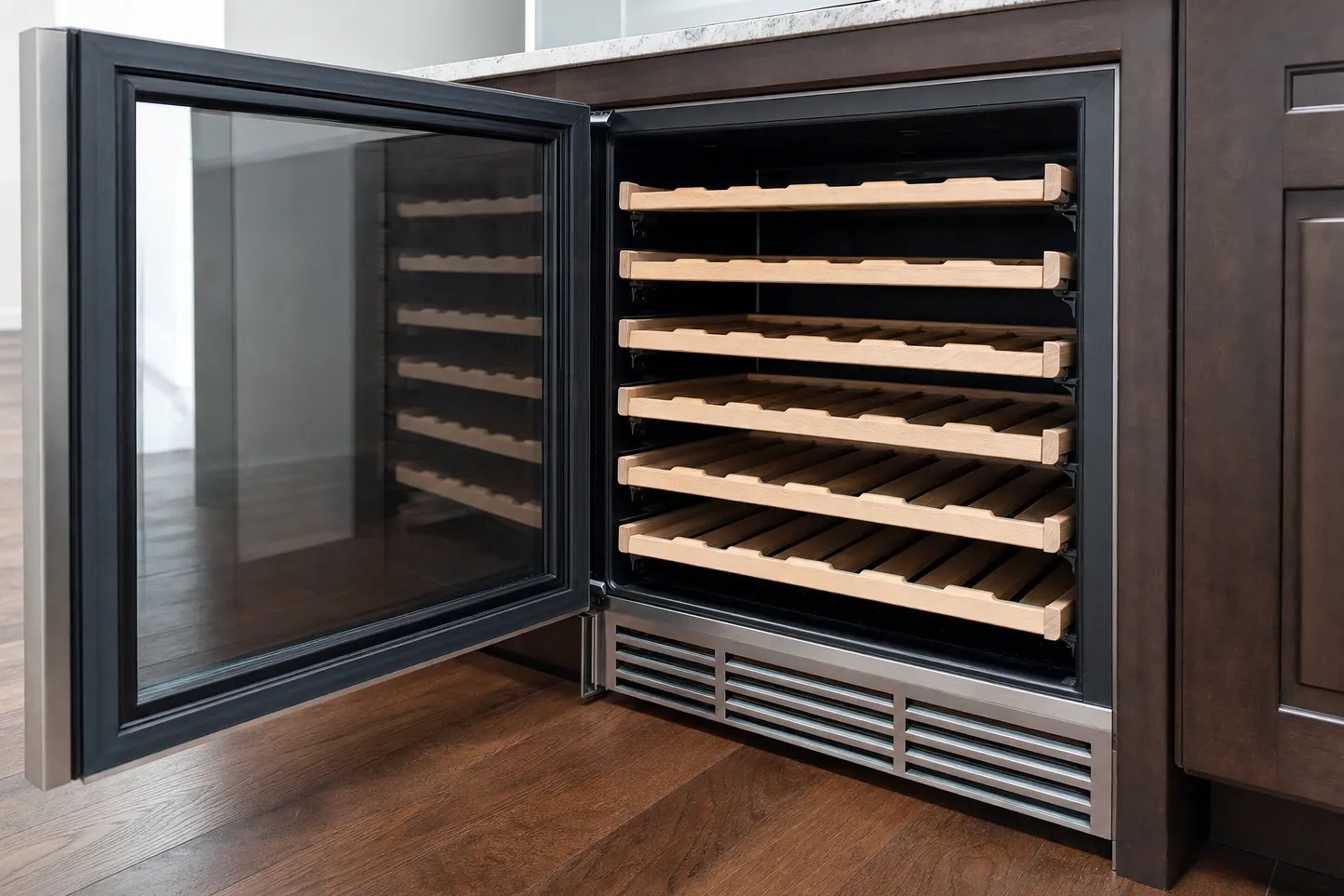
Refrigerator Repair
Fresh food side warm, freezer still cold: what a Sub-Zero is telling you
A warm fresh-food section with a cold freezer is the most misread Sub-Zero fault there is. What the two-circuit design means, the four things it usually turns out to be, and what you can check in a Denver kitchen before paying anyone.
Written by
Tobias Reinhardt
Refrigeration technician — doors, gaskets and cabinet fit · 9 years in the trade
Checks the door before the electronics. A cabinet that never stops running is usually being asked to cool the room through a gasket that went hard two winters ago.
- EPA 608 certified
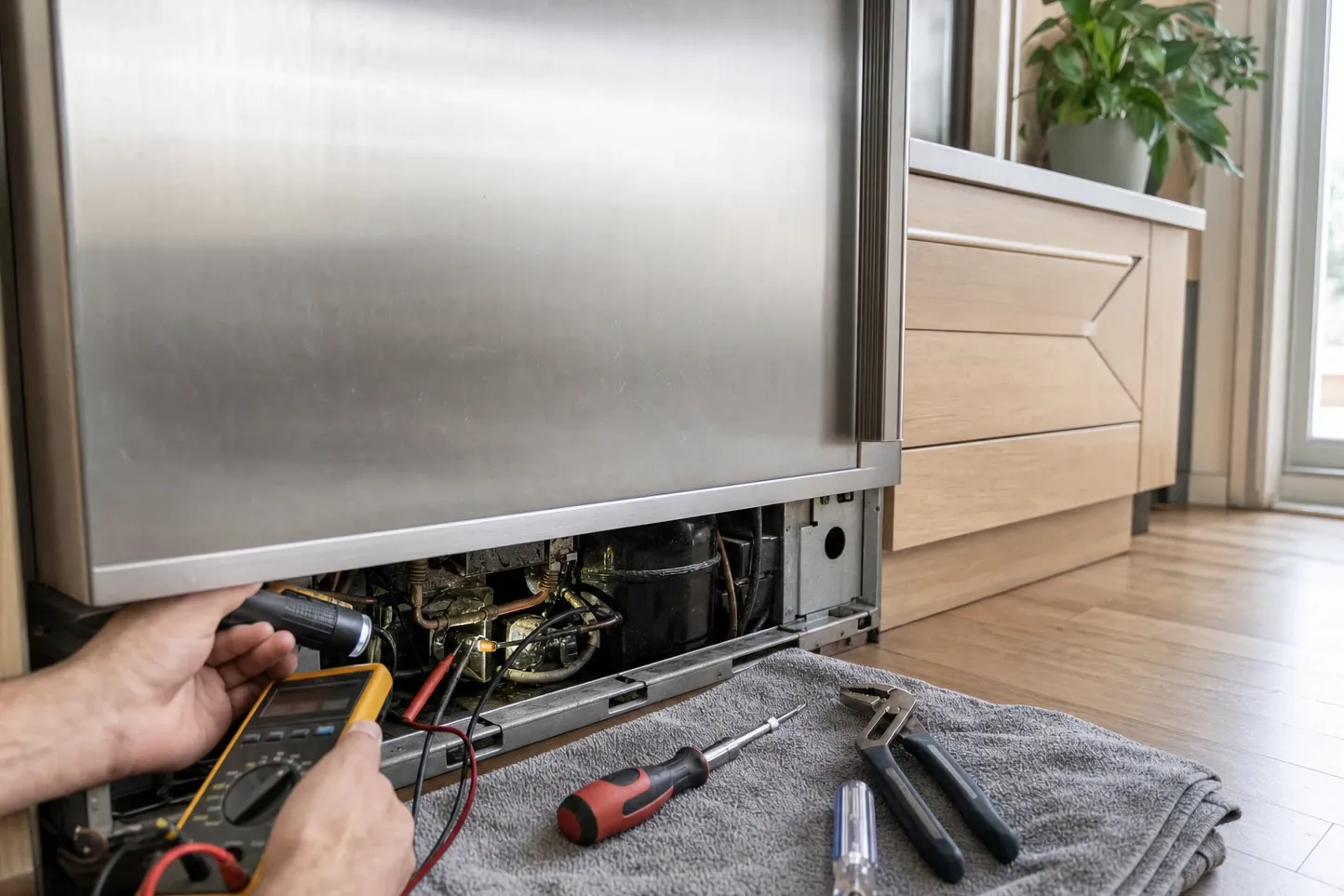
A Sub-Zero where the fresh food side sits in the fifties while the freezer is still hard frozen is the single most misdiagnosed fault we see in Denver. It is also the one that most often gets an owner quoted for a new cabinet by somebody who does not work on these machines every day.
The reason it gets misread is the assumption underneath it: that a refrigerator is one cooling system with a divider in it. On a built-in Sub-Zero that is not true.
Why one compartment can fail on its own
Built-in and integrated Sub-Zero units are dual-refrigeration machines. The fresh food section and the freezer section have their own evaporator coils, their own fans, their own defrost cycles and their own sensors. On most 600 and 700 series cabinets they have their own compressors as well.
That architecture is the reason the food in your freezer is fine. It also tells you something useful before anyone opens anything: if one compartment is holding temperature correctly, the shared parts are working. Power is good, the condenser is rejecting heat, the main control board is alive and communicating. The fault is inside one circuit.
That single deduction removes most of the expensive possibilities. What is left is a short list.
The four faults that account for most of them
The fresh-food evaporator fan. By a wide margin the most common. The coil is getting cold but nothing is moving that cold air into the cabinet, so the compartment drifts warm while the coil itself frosts over solid. Open the fresh food side, put your hand at the vents on the rear wall and listen. On a healthy circuit you can feel air. If it is silent and still, and there is a slab of frost behind the rear panel, you have found it. A seized or worn fan motor is a carried part and a same-visit repair.
A defrost fault on that circuit only. Each evaporator has its own heater and its own thermostat or sensor. When that heater fails, frost builds until it bridges the coil fins and the air path closes. The symptom looks identical to a dead fan at first, but the giveaway is history: it got gradually worse over a week or two, and it briefly improved after you propped the door open overnight.
A thermistor reading wrong. The sensor tells the board what the compartment temperature is. When it drifts, the board stops calling for cooling on that circuit because as far as it knows the job is done. This is the fault that produces the maddening version of the problem — a display showing a perfect 38 while the butter is soft. Nothing sounds wrong, nothing is frosted, and only a meter finds it.
An air damper stuck shut. On cabinets that share cold air between compartments, a damper that has jammed closed starves the fresh food side while the freezer runs on happily.
What to check yourself before calling
Four things, in this order. None of them requires a tool.
- Pull the lower grille and look at the condenser. In Denver this is where you get lucky most often. Cottonwood from the lake, pet hair, and drywall dust off a scrape next door pack the coil into a felt blanket. Vacuum it and brush it out. A choked condenser normally makes both sides drift, but on a cabinet that is already marginal it will take the fresh food side out first, especially through a ninety-degree stretch.
- Listen at the fresh food vents. Air moving, or silence. Write down which.
- Look behind the rear interior panel if you can see past it. A coil coated in even frost points at airflow or defrost. A coil frosted only at the bottom quarter points at the sealed system, which is a different conversation.
- Ignore the display and measure the air. A glass of water on the middle shelf, four hours, then a thermometer in the water. That number is the truth; the readout is only the sensor’s opinion.
What Denver adds to the picture
Three local things change the odds here. The dry air at this altitude means less humidity loading the coils, so a cabinet in this city that is building heavy frost is telling you something is genuinely wrong rather than that it is a humid week. The hot dry stretches in July put condensers under real load, and thinner air carries away less heat per pass, so a coil that would cope at sea level runs the compressor for hours here. And our storms take the power out and put it back twice in an evening, which leaves control boards in states they did not design for — a fault that appeared the morning after a hailstorm is worth mentioning on the phone, because a reseat and a settings reload has fixed more than one.
When it is worth calling someone out
Call when the fan is silent and the coil is frosted, when the display and your thermometer disagree, or when the compartment has been warm for more than a day. Those are meter jobs, and the parts behind them — a fan motor, a heater, a thermistor, a damper — are all routinely carried.
Do not call because a single compartment is warm and you have been told that means the whole machine is finished. On a dual-refrigeration Sub-Zero, one warm compartment is usually the cheapest kind of fault this cabinet can have: an $89 service call to find it, and a part that costs less than the food you are about to throw out.
Follow-ups
Can I keep using the freezer while the fresh food side is warm?
Yes, on a built-in with two circuits the freezer is independent and will hold. Move anything perishable down into it, leave the fresh-food doors shut, and do not run the unit on the coldest setting hoping to compensate — that just runs a healthy circuit harder without helping the failed one.
Does a warm fresh food side ever mean low refrigerant?
It can, but it is far down the list and it is the one thing you cannot test without gauges. A genuine sealed-system leak usually shows as a partially frosted evaporator, long run times on both circuits and a suction line that is not cold. A single warm compartment with a normal-sounding compressor is almost always electrical or airflow.
The display reads 38 but the milk is warm. Which do I trust?
Your own thermometer. The readout repeats what the sensor for that compartment reports, so a drifted thermistor produces a display that looks perfect while the air in the cabinet is ten degrees out. Put a glass of water in the middle shelf, leave it four hours, and measure that.
How long should a repaired fresh food section take to come back down?
Expect four to eight hours to reach setpoint from a fully warm cabinet, longer if it is loaded. That is why the pull-down gets watched rather than the door being shut on it — a fault that only shows up at the bottom of the curve is a fault you find twice.